Leak Detection in Prospect Heights, Brooklyn
Water stains spreading across a parlor ceiling or bubbling under hardwood floors can quickly cause structural devastation to pre-war buildings. Traditional destructive troubleshooting—tearing through finished lath-and-plaster walls—costs thousands in unnecessary restoration. Our non-invasive leak detection in Prospect Heights, Brooklyn pinpoints hidden leaks accurately before damage escalates.
Common Concealed Leak Scenarios in Historic Properties
Century-old Brooklyn architecture introduces unique plumbing pathways where water can travel several rooms away from the actual pipe breach:
Leaks Between Tenant Floors
In multi-family dwellings and converted brownstones, water stains appearing on lower-level ceilings frequently originate from worn tub waste overflows, cracked shower pans, or loose toilet wax seals in the apartment above.
Plumbing Shaft & Riser Leaks
Galvanized and brass vertical risers routed through common pipe chases corrode from the inside out. Pinhole leaks spray against floor joists, traveling silently down electrical conduits into basements.
Heating Loop & Boiler Return Leaks
When a central boiler repair system constantly calls for fresh makeup water, buried wet return lines beneath cellar concrete slabs have often deteriorated, leaking treated boiler water into the foundation earth.
Non-Invasive Diagnostic Methodology
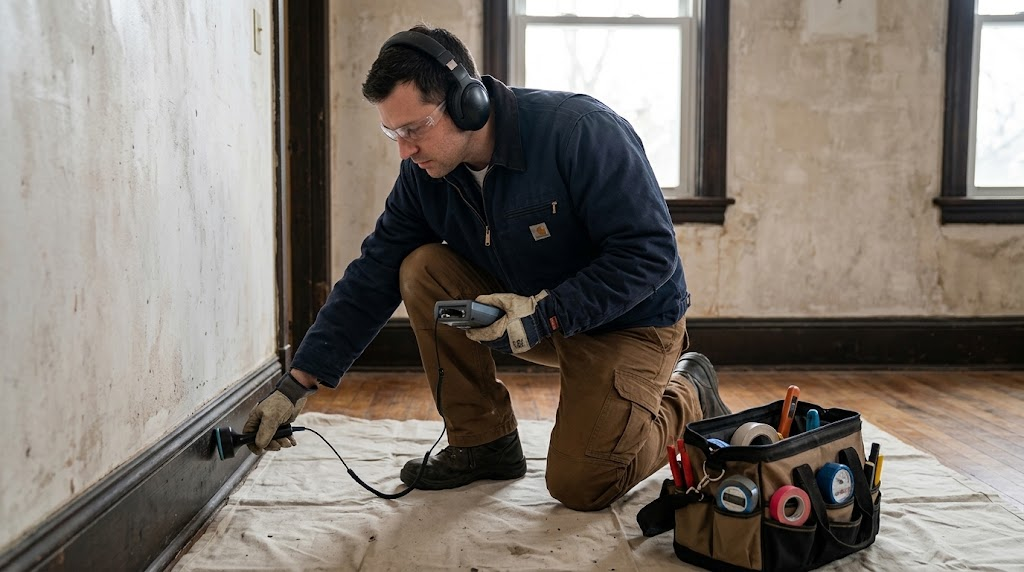
Rather than guessing where a leak is hiding, our technicians utilize specialized electronic instruments to identify the exact origin:
Thermal Imaging Infrared Cameras
Infrared thermography maps surface temperature variations down to 0.05°C. Hot water heating pipes or domestic supply lines display distinct thermal blooms, while cold water leaks show dark evaporative cooling signatures behind plaster and tile.
Acoustic Pipe Locators & Ground Microphones
Water escaping a pressurized supply pipe under 50 PSI produces a high-frequency hiss or frequency peak. Ground microphones amplify and filter ambient building noise, isolating the exact point of pipe failure to within inches.
Distinguishing Pressurized Supply Leaks from Gravity Drain Leaks
Accurate troubleshooting begins by isolating the operating mechanics of the leak:
| Diagnostic Factor | Pressurized Water Supply Leak | Gravity Sanitary Drain Leak |
|---|---|---|
| Flow Consistency | Continuous, constant dripping 24 hours a day | Intermittent; occurs only when fixtures drain |
| System Pressure | 40 to 65 PSI street water pressure | 0 PSI (Atmospheric gravity flow) |
| Primary Locations | Copper joints, brass risers, valve fittings | Cast-iron hubs, tub traps, shower strainers |
| Related Service | Supply pipe re-piping & water service repair | Branch line repair & drain cleaning |
Frequently Asked Questions About Leak Detection
To learn about full heating inspections, return to our boiler repair homepage or explore sewer line repairs for main drainage issues.